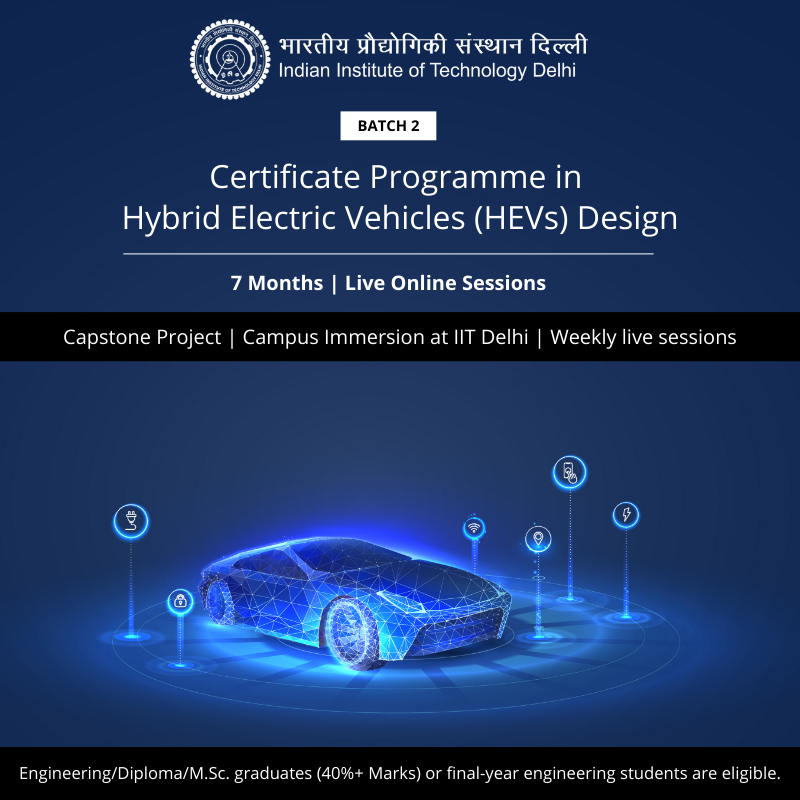
Certificate Programme in Hybrid Electric Vehicles (HEVs) Design (Batch 2)
Features
Programme Overview
The IIT Delhi programme in Hybrid Electric Vehicles (HEVs) Design is a one-of-a-kind programme in India that integrates key concepts spanning thermodynamics, IC engines, electric machines and drives, power electronics, automotive hybridisation, and battery design and modelling. Designed to bridge the gap between conventional automotive engineering and the burgeoning EV and Hybrid EV space, this programme provides the skills and insights needed to navigate the complexities of modern vehicle electrification.
Registration Closed
Class Schedule
7 Months | Live Online
Sunday 3:30 pm to 6:30 pm
Eligibility Criteria
Engineering/Diploma/M.Sc. graduates (40%+ Marks) or final-year engineering students are eligible. Engineering Students in their 6th, 7th, or 8th semesters are also eligible to apply. Please submit the University grade/marks sheet for the latest semester.
Programme Highlights
Weekly Live Sessions With IIT Delhi Faculty Who Have Designed The Programme In Line With The FAME Scheme
Campus Immersion At IIT Delhi Campus And The State-of-the-art Facilities At The Centre For Automotive Research And Tribology (CART)
Industry-aligned Insights From Programme Directors Who Have Successfully Delivered This Course For Two Years In The UK To Various Automotive Companies, Including Ford And Dyson
A Professional Network In The Automotive Industry
A Capstone Project Closely Guided By IIT Delhi Faculty
Certification From IIT Delhi
Programme Modules
Types of Systems
Laws of Thermodynamics
Thermodynamic Quantities: Heat, Work, Internal Energy, Entropy, etc
Reversible and Irreversible Processes
Cycles Used for Power Generation
Elementary Thermodynamics
Types of ICE and Different Components of an Engine
Air-standard Cycles
Fuel-air and Actual Cycles
Combustion in Engine
Types of Hybrids
Hybrid Categories
Hybrid Architectures
Benefit Mechanisms of a Hybrid Vehicle
Design of Hybrid and Realisation: Case Studies
Introduction: Fundamentals of Electric Motors
Electro-Magnetic Force (EMF)
Synchronous Machines
Brush-Less DC motor (BLDC) and Permanent-Magnet Synchronous Motor (PMSM)
Asynchronous Machines: Induction Motor
Power Electronic Devices: BJT, MOSFET, IGBT
Machine Control Basics
Sector Control and FOC (Field Oriented Control)
Inverters
Vector Control Applications
Introduction
Energy Storage Technologies: Mechanical, Electrostatic, Electrochemical
Battery Systems and Design Principles
Introduction to Fuel Cell Vehicles
Supercapacitors
Types of Models: Equivalent Circuit Models and Electrochemical Models
State Estimation Techniques
Battery Reliability and Health Management
Battery Safety, Testing and Thermal Runaway
BMS Development
Learning Outcomes
Explain internal combustion engine (ICE) operating characteristics.
Explain process of vehicle hybridization and electrification.
Explain various electric machines and propulsion technologies used in HEVs.
Understand different benefit mechanisms of EVs and HEVs
Explain the working principles of different types of energy storage systems.
Explain testing and modeling methods to characterize battery performance, reliability, and safety.
Tools
Python
Matplotlib
EVA
UI/UX
Programme Coordinator

Professor Husain Kanchwala
Professor
Centre of Automotive Research and Tribology
Indian Institute of Technology Delhi
Dr Husain Kanchwala is an Assistant Professor at the Centre of Automotive Research and Tribology, IIT Delhi. Prior to this, he was an Assistant Professor at the University of Warwick, United Kingdom (2019–2021). At Warwick, he developed multiple courses on automotive hybridisation and electrification and worked on motorcycle stability. He was a Senior Research Fellow at the Defence Academy of the United Kingdom (2018-2019).He was the project leader or the Multi-Car Collision Avoidance (MuCCA) project, which helped to build a framework to enhance road safety for' autonomous vehicles running in an urban environment. His post-doctoral work at Cranfield University (2017-2018) involved developing an off-road engineering simulator (ORES). This was a hardware-in-the-loop transient dynamometer for testing Jaguar Land Rover vehicles. He obtained his PhD from Indian Institute of Technology, Kanpur in Mechanical Engineering in 2017. In doctoral research, he proposed new theoretical formulations for a generalised quarter-car suspension model, modelling of suspension components using fractional derivatives, and Laplace domain model development of a vehicle using low-cost instrumentation systems. His research interests lies in the area of vehicle dynamics and control, vibration of continuous systems, rotor dynamics, battery modelling and hysteresis.
Programme Faculty
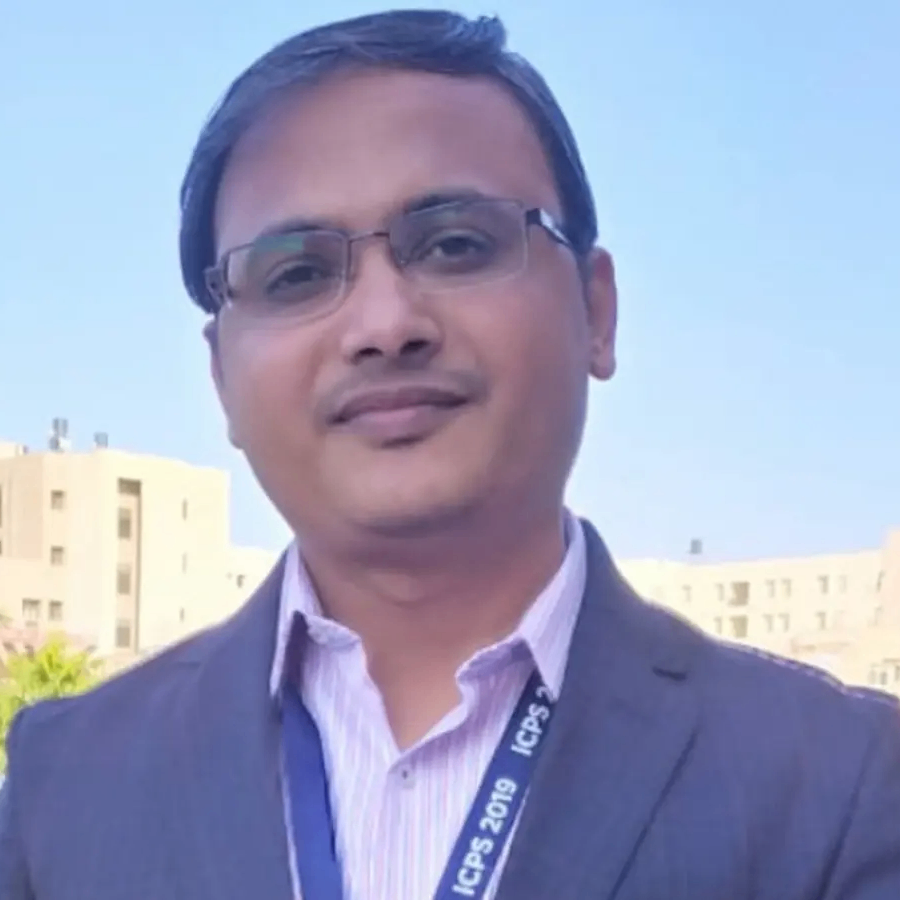
Professor Mandeep Singh Rana
Assistant Professor
Centre for Rural Development & Technology
Indian Institute of Technology Delhi
Dr. Mandeep Singh Rana received the B.Tech degree in electrical engineering from the National Institute of Technology, Bhopal, India, in 2013 and Ph.D. degree in power engineering with the Department of Electrical Engineering, Indian Institute of Technology Kanpur, India in 2023. He worked as an engineer in controls division in GE aviation for a year and currently, he is working as an Assistant Professor in CART, Indian Institute of technology Delhi, India. His research interests include design, control of power converter and active magnetics bearing (AMB).
Programme Sample Certificate
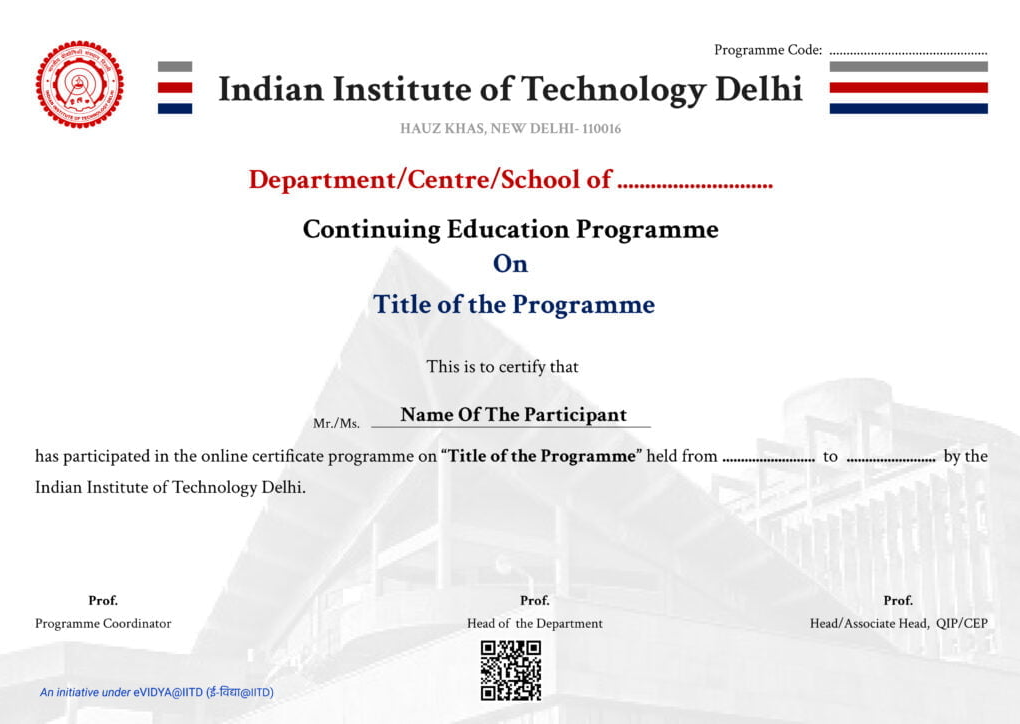
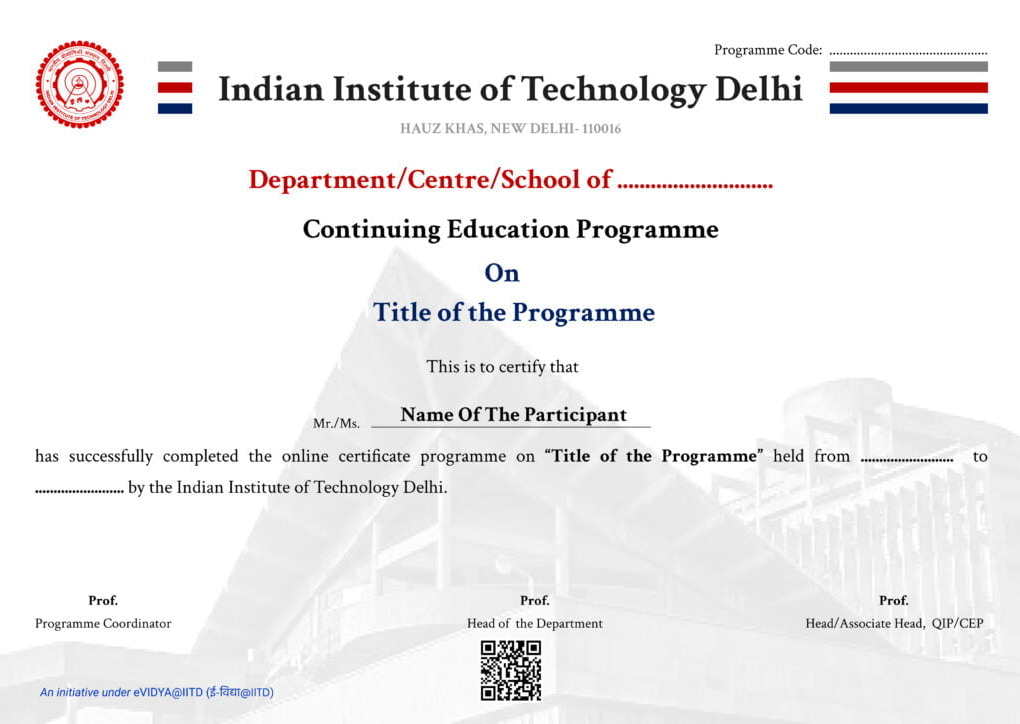
Candidates who score at least 50% marks overall and have a minimum attendance of 50%, will receive a Certificate of Successful Completion from CEP, IIT Delhi.
Candidates who score less than 50% marks overall and have a minimum attendance of 50%, will receive a Certificate of Participation from CEP, IIT Delhi.
The organising department for this programme is the Centre for Automotive Research and Tribology (CART), IIT Delhi.
Installment Schedule
Programme Fee INR 1,10,000 + GST
Remarks | Amount | |
Instalment 1 | Within 5 days post-selection | INR 22,000 + GST |
Instalment 2 | July 5, 2025 | INR 44,000 + GST |
Instalment 3 | Oct 5, 2025 | INR 44,000 + GST |
Note:
GST (currently @ 18%) will be charged extra on these components.
Refund Policy
Candidates can withdraw within 15 days from the programme start date. A total of 80% of the total fee received will be refunded. However, the applicable tax amount paid will not be refunded on the paid amount. • Candidates withdrawing after 15 days from the start of the programme session will not be eligible for any refund.
If you wish to withdraw from the programme, you must email cepaccounts@admin.iitd.ac.in and iitd.execed@emeritus.org, stating your intent to withdraw. The refund, if applicable, will be processed within 30 working days from the date of receiving the withdrawal request.
Frequently asked questions
The IIT Delhi Hybrid Electric Vehicle Programme is a specialised programme designed to provide in-depth knowledge and training in the field of electric vehicles (EVs). The programme covers key aspects of EV technology, including design, manufacturing, and maintenance, with a focus on hybrid systems.
The programme covers a wide range of topics, including the fundamentals of electric vehicles, hybrid electric vehicle design, battery technology, power electronics, charging infrastructure, and the latest developments in EV technology.
Yes, IIT Delhi offers the HEV Certificate Programme in an online format, making it accessible to professionals and students across the globe. The live online sessions allows participants to learn at their own pace while receiving guidance from IIT Delhi’s expert faculty.
The programme is ideal for engineers, automotive professionals, researchers, and anyone interested in gaining expertise in electric vehicle technology. It is also suitable for students and professionals looking to transition into the EV industry.
Participants will gain a comprehensive understanding of EV technology, learn from industry experts, and receive a prestigious certificate from IIT Delhi, which is recognised globally. The programme also enhances career prospects in the rapidly growing EV industry.
Upon successful completion of the course, participants will receive a certificate from IIT Delhi, recognising their expertise in hybrid electric vehicle technology.