
Executive Programme in Healthcare for Industry 5.0 (Batch 3)
Features
Programme Overview
The healthcare sector is on the brink of a significant transformation with the emergence of Industry 5.0, poised to transform healthcare by blending human and machine intelligence to establish a more personalized, sustainable, and robust healthcare system. To address this shift, CEP, IIT Delhi offers a comprehensive programme to equip healthcare professionals with the core knowledge, skills, and strategies needed to leverage the transformative potential of technology in healthcare. Through a mix of rigorous curriculum, industry insights, and practical experience, participants will be primed to navigate the complexities of Industry 5.0, foster innovation, and shape the future of healthcare provision. Join this intake to elevate your prowess in dynamic healthcare and Industry 5.0.
₹ 1,30,000 + 18 % GST
Registration Closed
Class Schedule
Saturday from 4:00 PM to 6:00 PM
Eligibility Criteria
Bachelor's degree in Science or Engineering or Medical fields (MBBS/Pharmacy / Nursing/ BDS or equivalent degree) with at least 50% marks in total or 5.0 CGPA.
Programme Highlights
E-Certificate Of Successful Completion From CEP, IIT Delhi
Live Interactive Sessions By IIT Delhi Faculty
2 Days Campus Immersion (Optional)
Case Studies Driven Learning
Peer To Peer Networking Opportunities
Programme Modules
Human Physiology: The study of how the human body works, including cells, tissues, organs, and systems.
Healthcare Fundamentals: The basic principles of healthcare, such as anatomy, physiology, and pharmacology.
Human Biomechanics: The study of the mechanical properties of the human body and how they affect movement, including the musculoskeletal system, biomechanics of gait, and biomechanics of sports.
Space Biomechanics: The study of the effects of the space environment on the human body, including microgravity, radiation, and isolation.
Patient flow management and facility planning and layout: Planning and coordinating the movement of patients through the healthcare system.
Resource management and Capacity planning for hospitals: Ensuring that the right resources are available to the right patients at the right time, including staff, equipment, and supplies. Capacity planning for hospitals, Inventory management.
Quality improvement: Implementing processes to improve the quality of care, including patient safety, patient satisfaction, and clinical outcomes.
Pharmacokinetics: The study of how drugs are absorbed, distributed, metabolized, and eliminated by the body.
Pharmacodynamics: The study of how drugs interact with the body to produce an effect.
Drug delivery systems: The route-specific delivery, recent strategies, biomedical polymers and sustained drug delivery.
Predictive modelling: Using data to predict future outcomes, such as readmission risk or patient mortality.
Treatment optimization: Identifying the most effective treatments for individual patients based on their data.
Personalized care: Tailoring care to the individual needs of each patient.
Fundamentals (up to Industry 3.0): Various manufacturing processes, Just-in-time, Kaizen, Automation, and Control systems.
Sensing, Actuating and Communicating Technologies: Various types of sensors, actuators, wireless communications and PLCs.
Cyber-physical systems: Integrating physical systems with digital systems to automate and optimize processes.
Internet of Things (IoT): Connecting medical devices to the internet to collect and analyze data.
Additive Manufacturing: Technologies for metal, polymer, ceramic and biological/ organic materials, Generative Design, Digital Inventory.
Cloud computing: Storing and accessing healthcare data in the cloud.
Demonstration: Generative Design, Haptic Devices for patient/subject-specific Medical Device Design, Additive Mfg., IoT-based 3D printing.
Why Industry 5.0: Reorganization costs, productivity, robots vs. cobots, advantages over Industry 4.0.
Human-centered design: Human factors, design of workspaces, injury-prone zones, fatigue reduction.
Machine Learning: Using AI to diagnose diseases, develop personalized treatment plans, and automate tasks.
Robotics: Using robots to perform surgery, provide care, and assist with rehabilitation.
Augmented reality/ virtual reality: Machine vision, haptics, virtual planning, gesture control.
Cobotics: Advanced automation and control, (LiDAR, RADAR), Haptics, Human-machine Interface.
Blockchain: Emerging technologies like blockchain in healthcare for secure data management and interoperability.
Demonstration: Surgical cobots, cobots in packaging and assembly.
Environmental sustainability: Reducing the environmental impact of healthcare operations.
Fair labor practices: Ensuring that employees are treated fairly and compensated appropriately.
Community engagement: Working with the community to improve health outcomes.
Ethics: A section on healthcare ethics and privacy considerations in the era of advanced technologies.
Identifying risks: Recognizing potential hazards that could harm patients, staff, or the organization.
Assessing risks: Evaluating the likelihood and severity of potential risks.
Managing risks: Implementing strategies to mitigate or eliminate risks.
Regulatory approvals: Obtaining necessary approvals from government agencies for new drugs, medical devices, and other healthcare products.
Risk-mitigation strategies: Design modifications, material modifications, risk-mitigation.
Capstone project involves literature survey and/or analysis and/or synthesis on a topic related to Healthcare or an application of technology for Healthcare, including but not limited to robotics, cobotics, augmented reality, biomechanics, medical devices and physiology. The Capstone project will involve about 4 to 5 students working towards a common topic.
Learning Outcomes
Understanding of Human Physiology to Pharma to Engineering for Healthcare
Risk Management and Regulatory Approvals for MedTech Products
Operations Management and Big Data Analytics for Healthcare
Integration of AI, augmented reality and robotics leading to Industry 5.0
Programme Coordinator
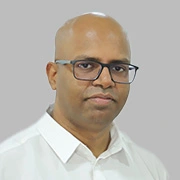
Professor Dinesh Kalyanasundaram
Associate Professor
Centre for Biomedical Engineering
Indian Institute of Technology Delhi
Prof. Dinesh Kalyanasundaram is a mechanical engineer by education (Bachelors: College of Engineering, Guindy; Masters: IIT Delhi; Ph.D.: Iowa State University; Post-doctoral research: University of Washington, Seattle; Biomedical consultant: L&T). His areas of interest include MedTech product design and manufacturing. Prof. Kalyanasundaram is the principal investigator of mPRAGATI, an ICMR-funded National facility for medical device translation.
His research group is focused on designing medical devices, validating their performance clinically and developing associated manufacturing processes. It develops both diagnostic devices as well as implantable devices. The group also works on tissue biomechanics and developing musculoskeletal models. The major research in the group includes developing devices for manufacturing processes for MedTech products.
In biomedical engineering, Prof. Kalyanasundaram works on both implantable as well as non-implantable medical devices like orthopaedic implants (Hip Replacement System, Knee Replacement System, Shoulder Replacement System, Spinal implants, Ocular implants, etc.), vascular implants (catheters, cardiovascular stents, neurovascular stents, tubing, etc.), a Hearing screening device, LAMP assay for pathogen diagnosis, Cervical cancer diagnosis, etc. These products have been developed in association with various institutes of immense prestige, like the All India Institute of Medical Sciences (AIIMS) Delhi, CSIR-CSIO Chandigarh, KGMU (King George Medical University) Lucknow, MAMC (Maulana Azad Medical College) Delhi, etc.
Programme Faculty
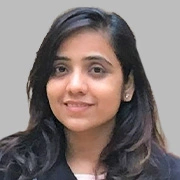
Professor Priya Vashisth
Assistant Professor
Centre for Biomedical Engineering
Indian Institute of Technology Delhi
Prof. Priya Vashisth joined the Centre for Biomedical Engineering at IIT Delhi as an Assistant Professor in 2023, focusing on biomedical implants and localized drug delivery for treating coronary vascular diseases. She aims to develop tissue-based ex vivo platforms for studying vascular pathology and reducing animal model dependency. With a Ph.D. in Biotechnology from IIT Roorkee (2016) centered on electrospun dermal grafts, she previously conducted postdoctoral research at King's College London on nano-needle drug/gene delivery. She also served as a DST-Inspire Faculty at IIT Delhi, developing drug-eluting vascular stents for atherosclerosis treatment.
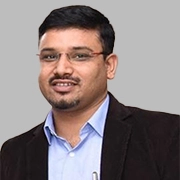
Professor Deepak Joshi
Associate Professor
Centre for Biomedical Engineering
Indian Institute of Technology Delhi
Prof. Joshi, an IIT Delhi Ph.D. with postdoctoral experience at the University of Oregon, joined IIT Delhi after working at the National University of Singapore and Newcastle University. A recipient of the 2017 Teaching Excellence Award at IIT Delhi and a 2014 AAAS member, he holds a granted US patent and has achieved technology transfer. His research, funded by DST and ICMR, combines experimental and computational techniques to study neural correlates of walking and balance, aiming to develop assistive devices for elderly, stroke, and Parkinson's patients.
Programme Sample Certificate
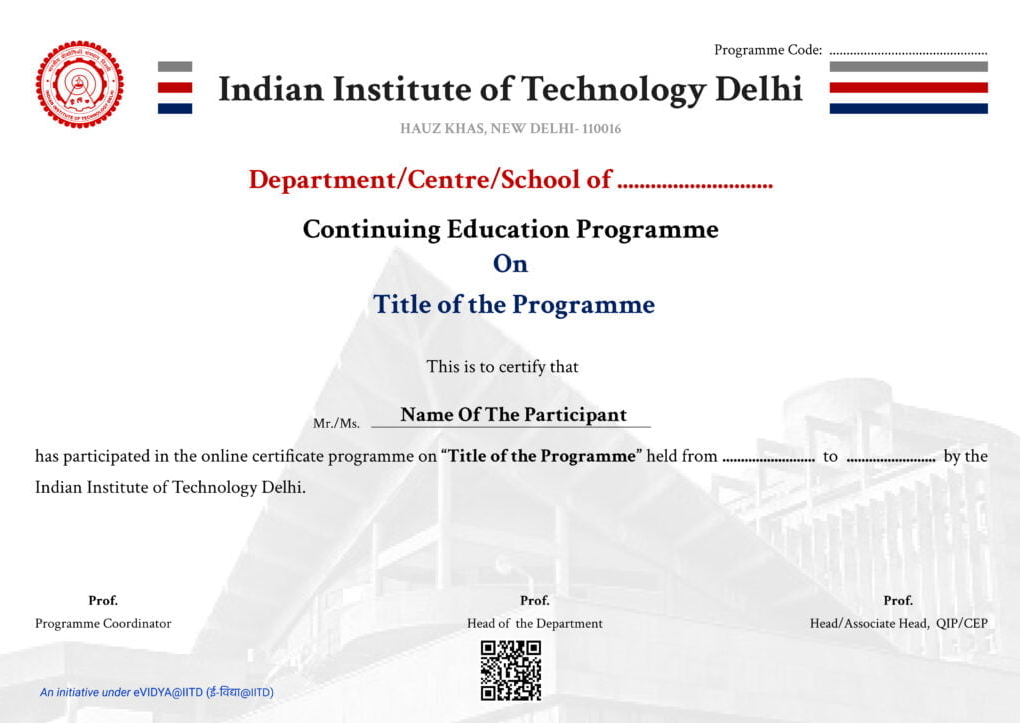
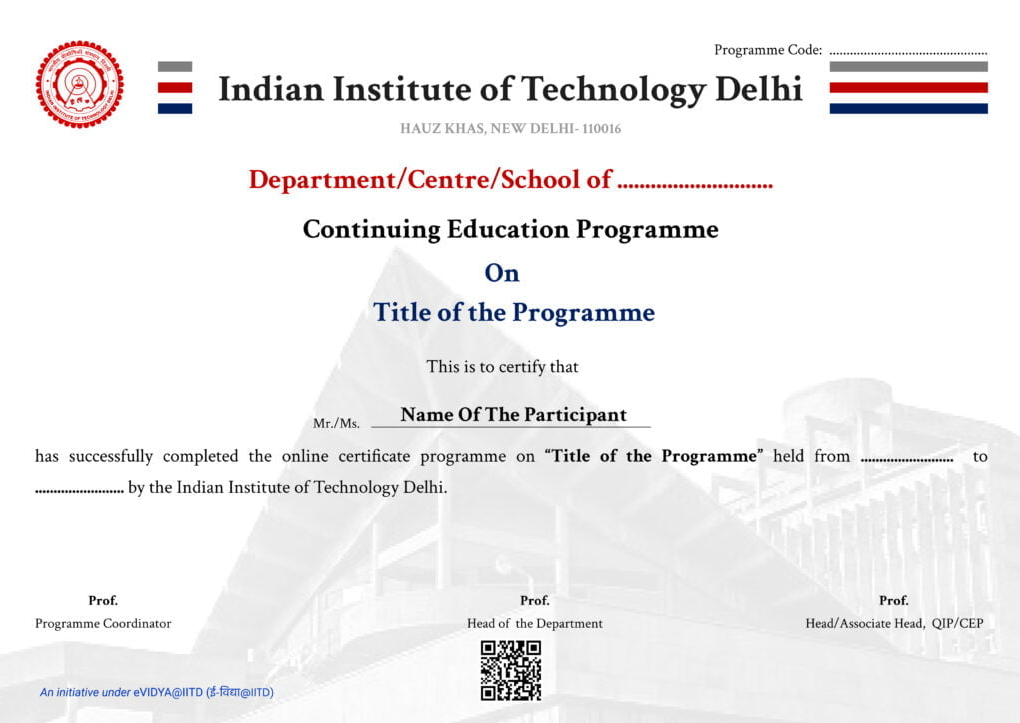
You will be awarded a ‘Certificate of Successful Completion’, if you obtain 50% aggregate marks in the evaluation components and maintain a minimum attendance of 50% in lectures.
Participants who are unable to score 50% marks in the evaluation will be eligible for the ‘Participation Certificate’ if they maintain a minimum attendance of 50% in lectures.
The above e-certificate is for illustrative purposes only, and the format of the certificate may be changed at the discretion of IIT Delhi.
Only an e-certificate will be provided and it will be issued by CEP, IIT Delhi.
This programme is offered by the Centre for Biomedical Engineering (CBME).
Installment Schedule
Programme Fees: 1,30,000 + 18 % GST
Installment | Installment Date | Amount (₹) |
Application Fees | Non-refundable Application Fee | ₹ 500 + 18 % GST |
I | Within 3 days of offer rollout | ₹ 80,000 +18% GST |
II | 28th August, 2026 | ₹ 30,000 + 18% GST |
Note:
Application Fee of INR 500/-+ GST is non-refundable and will not be adjusted in the total programme fee.
Payment of fees should be submitted in the IIT Delhi CEP account only and the receipt will be issued by the IIT Delhi CEP account for your records.
Refund Policy
Candidates can withdraw within 15 days from the programme start date. A total of 80% of the total fee received will be refunded. However, the applicable tax amount paid will not be refunded on the paid amount.
Candidates withdrawing after 15 days from the start of the programme session will not be eligible for any refund.
If you wish to withdraw from the programme, you must email cepaccounts@admin.iitd.ac.in and crm.supportiitd@jaro.in, stating your intent to withdraw. The refund, if applicable, will be processed within 30 working days from the date of receiving the withdrawal request.
Frequently asked questions
This EPHI 5.0 programme stands out for its focus on Industry 5.0 and its tailored curriculum designed specifically for healthcare executives, offering practical insights and strategies for navigating the evolving healthcare landscape.
Focus on the cutting-edge Industry 5.0 paradigm, distinguishing it from traditional healthcare management programmes.
Emphasis on the integration of human-centric approaches with advanced technologies.
Collaboration with industry leaders and academic experts ensures relevance and practical applicability.
Comprehensive curriculum covering a wide range of topics, including personalized medicine, digital health, and healthcare analytics.
Opportunity for participants to contribute to research projects and industry collaborations, fostering a culture of innovation.
Yes, upon successful completion of the EPHI 5.0 programme, participants will receive a certification from CEP, IIT Delhi.
This programme consists of a series of modules or courses covering different aspects of healthcare in Industry 5.0, with live lectures, and interactive sessions facilitated by industry experts and faculty.