
Executive Programme in Operations Management and Analytics (Batch - 6)
Features
Programme Overview
In today’s dynamic and digitally driven business landscape, operational excellence and data-informed decision-making are no longer optional—they are strategic imperatives. The Executive Programme in Operations Management and Analytics, offered by CEP, IIT Delhi, is meticulously designed to equip professionals with the expertise to optimize complex systems, elevate performance metrics, and lead operational transformation with precision.
This interdisciplinary programme is ideal for professionals across functions—whether from core operations, project management, manufacturing, or even non-operational roles—seeking to build or deepen their capabilities in operations strategy, process optimization, and analytics-driven leadership.
₹ 1,40,000 + 18 % GST
Registration Closed
Class Schedule
Duration: 9 months.
Session Timing: Sunday, 9:30 am to 1:00 pm
Eligibility Criteria
Graduates & Diploma holders (10+2+3) are acceptable.
Programme Highlights
Certificate Of Successful Completion From CEP, IIT Delhi
Experience High-impact Live Online Learning
Explore Real-world Case Studies/caselets
Gain Industry-oriented Insights From Eminent IIT Delhi Faculty Members
Peer-to-peer Learning And Expand Your Professional Network
Rigorous Cutting-edge Curriculum Developed In Collaboration With Leading Faculty From IIT Delhi
Learn The Role Of Analytics In Operations Management Besides Core Industry Operations
Twelve Modules On Operations Management, And Three Modules On Analytics
Programme Modules
Introduction to Concepts, Tools, Techniques and Analytics
Traditional and Advanced Production Systems
Need for product redesign and development
Chase and Production Level Strategy
Mixed strategy
Capacity Management (CPOF and Capacity bill, resource profile)
Preventive and Proactive Maintenance Policy
Queue Planning (M/M/1, M/M/S, M/D/1 Models for job in queue management)
Six Sigma Process in Operations
Quality Control Charts (X and R-Charts, P & NP Charts)
Types of Inventory Costs
EOQ/POQ/PPB Models
Multi-Criteria ABC analysis
MRP Construction
MRP Nervousness
This Module will provide insights to construct MRP Tables for dynamic/fluctuating product demand. The MRP tables provide time-scheduling information about when and how much the material needs to be procured to meet the market demand of the final product. The MRP table will integrate the inventory models discussed in Model VII to optimize the ordering policy. Finally, the MRP Table would help inventory managers to procure inventory at the right time in the right quality at the minimum inventory procurement cost.
Time Series models (Exponential, Adjusted Exponential, Winter Holt model)
Regression (Linear Trend Model)
Demand Forecasting
Business Simulation in Operations
Decision Tree Analytics
This module will demonstrate the application of various forecasting models discussed in Module II, using R and Excel on historical sales data. It will help sales managers and decision-makers estimate the most accurate demand forecasts with minimal error. By the end of the module, participants will be equipped to apply forecasting models in R and Excel to effectively predict future demand.
Vendor Selection and Evaluation
Risk Mitigations in Operations
This module will cover the application of various MCDM (Multi-Criteria Decision-Making) tools and techniques for selecting vendors, machines, parts, and product designs—particularly for medium- and long-term industrial decisions. Participants will also learn how to apply MCDM methods for risk mitigation in supply chains. Techniques covered include ISM, AHP, and TOPSIS. Ultimately, this module will enable managers to make informed short-term, medium-term, and long-term decisions, such as selecting suitable vendors or mitigating operational risks within the supply chain.
Product, Process, Fixed and Cellular Layout
CPM and PERT analysis of the project
Why: Operations in projects require hybrid management
Content: Agile for operations, hybrid project approaches, rapid prototyping, operationalizing project deliverables
Production Management
Facility Layout Planning
Why: Highly effective in process industries, manufacturing, and services
Content: TOC principles, constraint identification, throughput maximization
Why: Essential for future-ready operations managers
Content: IoT, process automation, digital twins, cloud-based operations management, additive & smart manufacturing
Why: The service sector is a large employer; service design differs from manufacturing
Content: Blueprinting, customer experience, service quality (SERVQUAL), omni-channel delivery, Service design and delivery, Service quality management
Why: Generative AI is revolutionizing process automation, predictive maintenance, demand forecasting, quality assurance, process innovation, and problem-solving in operations. Familiarity with GenAI is fast becoming essential for future-ready operations leaders.
Content: Overview of GenAI technologies, Predictive maintenance and failure analysis, GenAI-powered process automation: documentation, SOPs, troubleshooting, etc.
Learning Outcomes
Understand core operations concepts, tools, and analytics techniques.
Master production and capacity planning strategies.
Learn maintenance policies and queue management models.
Apply Six Sigma principles and quality control tools in operations.
Optimize inventory using EOQ, POQ, and ABC analysis.
Build and interpret MRP tables for dynamic demand scenarios.
Forecast demand using time series and regression models.
Leverage predictive and descriptive analytics for decision-making.
Explore digital operations, Industry 4.0, and GenAI applications.
Apply all concepts through a hands-on capstone project.
Tools
MS Office
Excel
AI
Machine Learning
Programme Coordinator
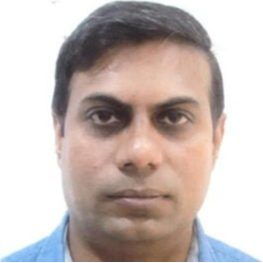
Professor Surya Prakash Singh
Professor
Head of Department of Management Studies
Indian Institute of Technology Delhi
Prof. Surya Prakash Singh is a Dhananjaya Chair Professor in the Department of Management Studies (DMS), Indian Institute of Technology Delhi (IITD), India. He is also serving as chairperson of, Operations & Supply Chain group at DMS, IIT Delhi. He holds a Ph.D. from IIT Kanpur. He is also a postdoctoral fellow from the NUS Singapore-MIT USA alliance. He has also been a visiting fellow at Newcastle Business School, Newcastle University, UK, and a visiting professor at Aalborg University, Denmark, and IMT Atlantique, Nantes, France. In addition to this, he was also associated in various capacities at some of the B-Schools in the country, such as IIM Amritsar, IIM Bodhgaya, IIM Kashipur, IIM Ranchi, IIM Rohtak, IIM Raipur, MDI Gurgaon, SNU Gr. Noida, SCMHRD Pune, XLRI, and XIM Bhubaneswar
Programme Sample Certificate
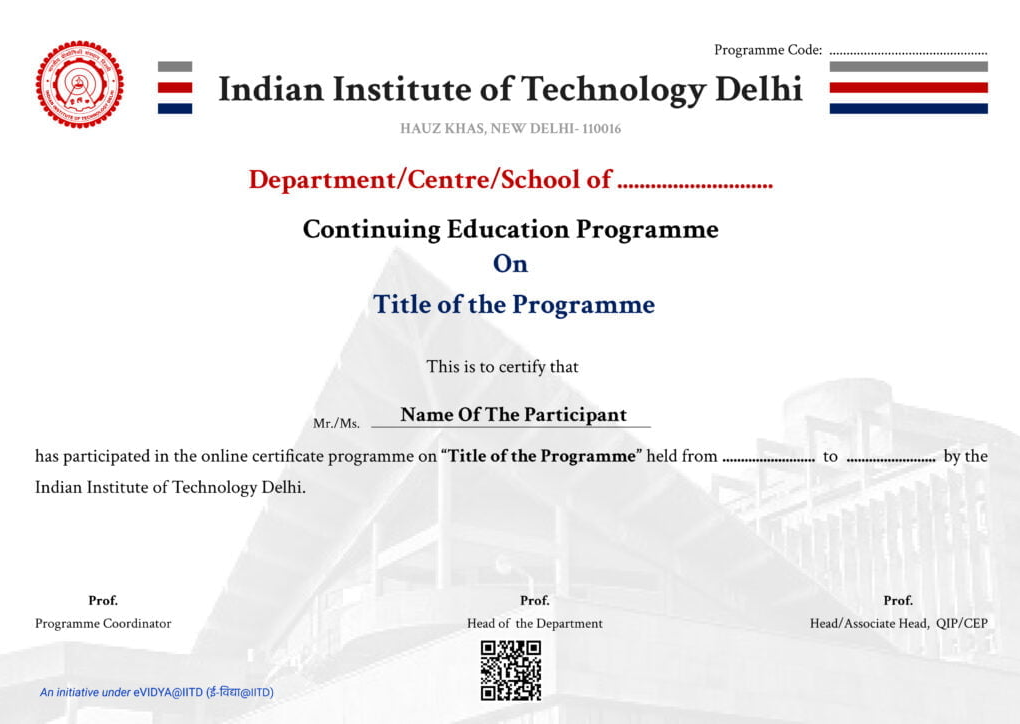
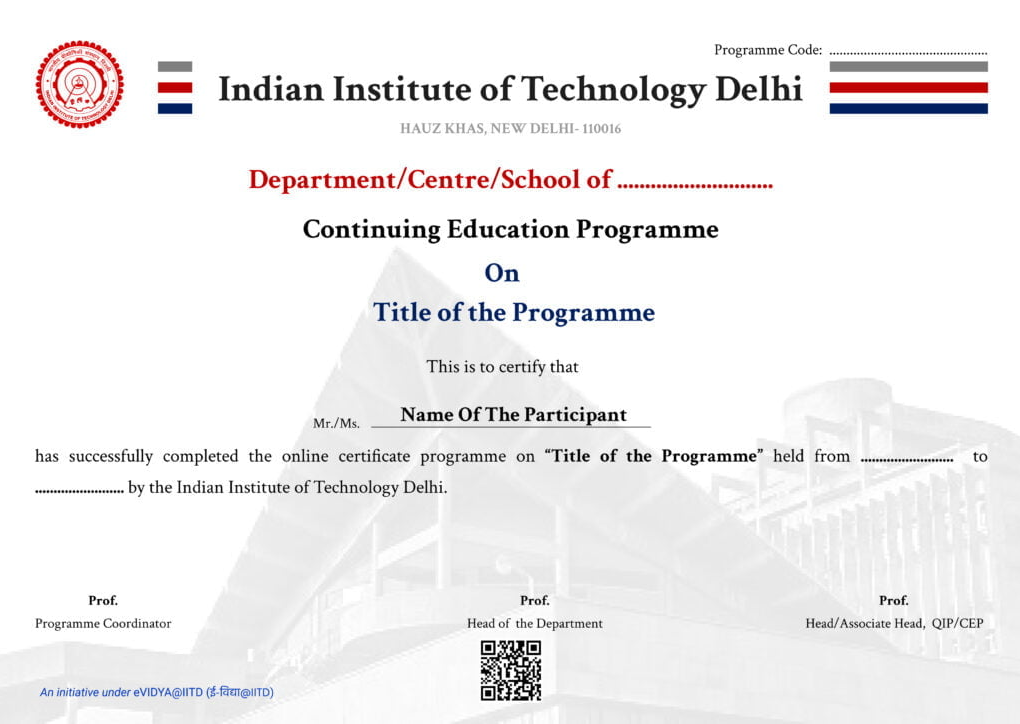
Participants who successfully meet the evaluation criteria (Aggregate Marks > 50%) and satisfy the requisite attendance criteria will be awarded a ‘Certificate of Successful Completion’ from Continuing Education Programme (CEP), IIT Delhi.
Participants who are unable to score 50% marks in the evaluation will be eligible for the ‘Participation Certificate.’
The organizing department for this programme is the Department of Management Studies (DMS), IIT Delhi.
*Only e-certificates will be issued by CEP, IIT Delhi.
Installment Schedule
Programme Fee INR 1,40,000 + GST
Instalment | Date | Amount (₹)* |
Application Fee** | At the time of application | 1,000 |
1st Instalment | Within 3 days of the offer rollout | 70,000 |
2nd Instalment | 12th October, 2025 | 70,000 |
Note:
Application Fee of INR 1,000/- + GST is non-refundable and will not be adjusted in the total programme fee.
Payment of fees should be submitted in the IIT Delhi CEP account only, and the receipt will be issued by the IIT Delhi CEP account for your records
Refund Policy
Candidates can withdraw within 15 days of the programme start date. A total of 80% of the total fee received will be refunded. However, the applicable tax amount paid will not be refunded on the paid amount.
Candidates withdrawing after 15 days from the start of the programme session will not be eligible for any refund.
If you wish to withdraw from the programme, you must email cepaccounts@admin.iitd.ac.in and crm.supportiitd@jaro.in, stating your intent to withdraw. The refund, if applicable, will be processed within 30 working days from the date of receiving the withdrawal request.
Programme Related Video
Testimonials
Frequently asked questions
This 9-month programme features engaging online live lectures.
The candidate must have a bachelor’s degree in any discipline from a recognized university with aggregate marks > 50% or an equivalent Diploma is accepted.
The programme is offered in an online mode, and the classes are conducted through live interactive sessions by experienced faculty members of IIT Delhi. Participants will also get access to self-paced lectures.
New Managers in operations roles (such as core operations, project management, business excellence, or program management) looking to build a strong foundation in operational concepts like capacity planning, workflow optimization, and error reduction.
Mid to Senior-Level Managers aiming to refresh and deepen their understanding of key operations principles.
Executives from manufacturing, quality, and business excellence functions seeking to enhance cost efficiency, quality, flexibility, and overall operational performance.
Fresh Graduates aspiring to build a career in core operations with strong conceptual grounding and practical exposure.
Entrepreneurs passionate about solving operational challenges and driving improved management practices within their organizations.
The programme fee is INR 140,000 plus applicable GST.
Tools such as Excel, R, Lingo, Power BI, Cloud-based analytics, Machine Learning etc. will be covered during the course of the programme.
Screening and selection will be done by IIT Delhi based on the candidates’ profile and their write-up on “Expectations from the Programme”.