
Online PG Diploma in Electric Vehicle (EV) Technology
Features
Programme Overview
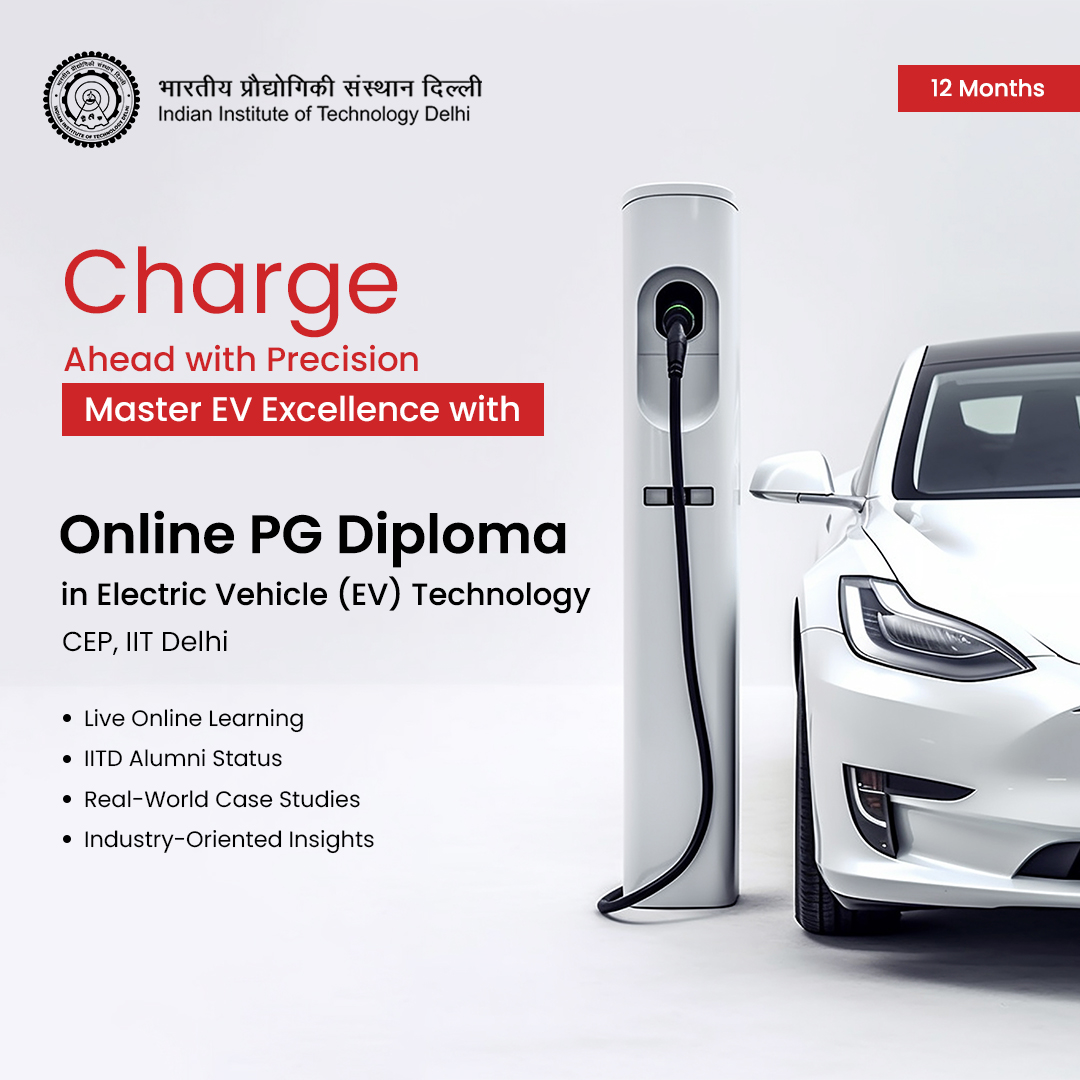
The Online PG Diploma in Electric Vehicle (EV) Technology is a specialized course aimed at meeting the growing demand for qualified professionals in the electric vehicle sector. With the rapid shift towards sustainable transportation, there is a critical need for experts who can design, develop, and operate electric vehicles. The online electric vehicle course, delivered by experienced faculty from IIT Delhi, focuses on core electrical aspects such as motors, powertrains, charging infrastructure, batteries, and energy storage systems.
This Online PG Diploma in Electric Vehicle (EV) Technology offers a solid foundation in the engineering principles behind electric vehicles. Students will develop a deep understanding of how EV components work together to create efficient and high-performance vehicles. This electric vehicle course curriculum includes power electronics, motor drives, battery technologies, and hybrid systems. It also explores the latest advancements in EV charging, including global standards, energy-efficient solutions, and sustainable infrastructure.
₹ 4,50,000 + 18 % GST
Registration Closed
Class Schedule
Course Duration: 12 Months | 240 Hours of Learning
Session Timings: - Saturday, 6:00 pm to 9:00 pm, Sunday, 10:00 am to 1:00 pm
Eligibility Criteria
Bachelor’s degree in any Electrical Science discipline with a minimum of a first-class.
Diploma in any Electrical Science discipline with a minimum of first-class and at least 3 years of experience.
Programme Highlights
High-impact Live Online Learning And Real-world Case Studies
Engage In Three Immersive On-campus Experiences At IIT Delhi
Industry Insights From Esteemed IIT Delhi Faculty
Peer Networking With Like-minded Professionals
Earn Online PG Diploma Upon Successful Completion
Affiliate Alumni Status
Programme Modules
Introduction to HEV, PHEV, and EV Powertrain
- Fuel cell vehicles
- Comparison between ICE and EV: operating principles, emission control
- Overview of Indian and international regulatory requirements for EV - AIS-048 BoV
- Fundamentals of Vehicle Propulsion
- Electric Propulsion System: drives
- Hybrid Electric Vehicles: series, parallel hybrid powertrains
- Energy Storage for EVs: Battery, ultracapacitors, Fuel cells
- Battery Management System (BMS)
- Chargers and charging infrastructures, Battery swapping stations
- Controllers, sensors, and communication protocols
- EV Telematics
- Fundamentals of Regenerative Braking
- Modeling and simulation of EVs
- Design examples for HEV, EVs
Global overview of Transportation electrification
- Role of Power Electronics and Drives in Transportation Electrification
- Vehicle system dynamics
- Introduction to Electromagnetic Energy Conversion
- Electric drivetrain system
- System design considerations, rating, and sizing of electric drivetrain components
- Machines and drives for traction and EVs: BLDC, PMSM, IM, SRM
- Control of Electric Drives
- Starter-generators in HEV
- Battery Charging
- Bidirectional DC-DC converters
- Control of grid-connected converters
- Architectures, modeling, and simulations of electric drivetrains
- Case study: Railway Traction, Aircraft Power Generation
Driving cycles for EVs
- Design driving factors
- Vehicle System Modeling
- Real-time controllers: Compilers, linkers, debuggers, Interrupt-based programming
- Different PWM schemes and generation
- Design and simulation of basic converter topologies, drivetrains
- PWM switching and average converter model
- Controller design and stability analysis
- EMI/EMC design considerations in PCB design of power electronics
- Thermal analysis for power electronic components
- Failure analysis techniques: FMEA, ISO 26262, Fault tree analysis
Introduction to Energy Storage Systems (ESS)
- Types of Batteries, their working mechanisms, and characteristics
- Applications of Batteries and ultracapacitors in EVs
- Component sizing and simulations
- Comparison between different cell chemistry w.r.t. power, energy, safety, lifespan, performance, cost
- Battery design parameters for EVs
- Battery Architecture, passive components sizing, isolation requirements
- Manufacturing of batteries
- Battery modeling: cell to pack
- Battery pack design issues and failures
- Battery Pack Performance & Safety testing standards
- Battery management systems (BMS)
- Overview of Safety circuits: overvoltage, undervoltage, pre-charge circuit, isolation monitoring, HVIL, MSD, Fuses
- Impact of temperature on batteries
Introduction to noise, vibration, harshness (NVH)
- Noise measurement parameters, standards, and techniques
- Instrumentation for noise measurement and analysis
- Noise source characterization and control
- Noise and Vibration control measures in automobiles
- Sound Quality and Human Response
- Maintenance strategies and condition monitoring in automotive
- Instrumentation of Condition Monitoring techniques
- Signal analysis and fault classification
- Automotive elements health monitoring
- Concept of Machine learning and IoT in condition monitoring of automobile
- Case studies on automobile noise and condition monitoring
National EV charging station status
- Charger types, Charging station types
- Connectors and Plug-in Charging technologies
- Charging Protocols & Connectors: CHAdeMO, CCS, GB/T, ChaoJi (upcoming)
- Slow charging, fast charging methods
- CAN-based and PLC-based charging overview
- Thermal management, active and passive equalization
- Overview of EVCC (electric vehicle charging controller)
- Communication between onboard charger, controller, BMS, VCU, and charging station
- Constant current and constant voltage charging during various battery SOC
- Sustainable Charging systems
- Solar Powered Charging stations
- V2H, V2X, Vehicle to Vehicle, Vehicle to Grid
Energy storage systems for electric transportation, smart grid, and renewable energy systems
- Working principles of batteries (various chemistries)
- High power ultra-capacitors and energy-dense fuel cell systems
- Battery energy management techniques
- Ultra-capacitor power management techniques
- Power electronics for energy and power management
- Hybrid energy storage systems and controller development
- Charging and infrastructure design
Students will select a research topic for the minor project. It is expected that such topics would involve an understanding of basic processes and applications
Students will select a research topic for the minor project. It is expected that such topics would involve an understanding of basic processes and applications
The total credits will be added in the credit bank as per NEP policy.
The Programme Curriculum is subject to change based on inputs from the institute and experts.
Each course will have two or three evaluations, along with other evaluation components such as quizzes, presentations, and more.
Learning Outcomes
Master electric vehicle electrical systems: batteries, motors, chargers, and protocols.
Acquire expertise in power electronics: electric drivetrain and charging infrastructure design.
Gain hands-on experience: EV systems at IIT Delhi labs.
Collaborate on R&D projects: innovative start-up solutions with expert faculty.
Tools
HEVs
EV
EVA
AI
Machine Learning
Programme Coordinator
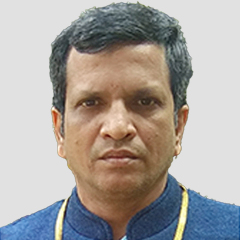
Professor Bijaya K. Panigrahi
Professor
Department of Electrical Engineering
Founder & Former Head, CART,
Indian Institute of Technology Delhi
Dr. Bijaya Ketan Panigrahi (Fellow, IEEE) has been a Professor in the Department of Electrical Engineering at IIT Delhi since 2005 and was the Founding Head of the Centre for Automotive Research and Tribology (CART). He currently holds the Indu Shrivastava & Serla Singh Chair Professorship in Artificial Intelligence at IIT Delhi.He is an Associate Faculty at the Bharti School of Telecommunication Technology and Management, the Amar Nath and Shashi Khosla School of Information Technology, and the Yardi School of Artificial Intelligence at IIT Delhi. Before joining IIT Delhi, he was a faculty member in the Department of Electrical Engineering, University College of Engineering, Burla, Sambalpur, Odisha, from 1992 to 2005.His research focuses on AI-based solutions for power quality event detection, induction motor fault diagnostics, and electric vehicle motor diagnostics. He has also worked extensively on maximum power point tracking controllers for solar photovoltaic systems. His current research explores energy management in smart grids, EV charging infrastructure, the impact of fast charging on the grid, EV battery technology, battery management systems, and cybersecurity in power infrastructure.Dr. Panigrahi has published over 700 research articles in international journals and conference proceedings. He is a Fellow of IEEE, the Indian National Academy of Engineering (INAE), the National Academy of Sciences (NASI), and the Asia-Pacific Artificial Intelligence Association (AAIA).

Professor Santanu Kumar Misra
Professor
Centre for Automotive Research and Tribology
Indian Institute of Technology Delhi
Dr. Santanu K. Misra (S’00-M’04-SM’12) earned his B.Tech. in Electrical Engineering from the College of Engineering and Technology, Bhubaneswar, India, in 1998, an M.Tech. in Energy Systems Engineering from the Indian Institute of Technology (IIT) Chennai in 2000, and a Ph.D. from the Department of Electrical and Computer Engineering, University of Florida, Gainesville, USA, in 2006.From 2004 to 2008, he worked as a Staff Application Engineer at International Rectifier Corporation, Rhode Island, USA. He then served as a Professor of Electrical Engineering at IIT Kanpur from 2008 until April 2023. Currently, he is a Professor at the Centre for Automotive Research and Tribology (CART), IIT Delhi.His research interests include EV charging infrastructure design, power converter design, implementation, and control, particularly for rural applications. He is an Associate Editor for the IEEE Transactions on Industry Applications and IEEE Transactions on Power Electronics.Dr. Misra is a Fellow of IET, INAE, and IETE.
Programme Faculty
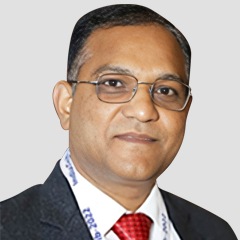
Prof. Deepak Kumar
Professor & Head
Centre for Automotive Research and Tribology
Indian Institute of Technology Delhi
Dr. Deepak Kumar is working as a Professor at Centre for Automotive Research and Tribology (CART), Indian Institute of Technology Delhi, and currently the Head of this Center. He obtained his B.Tech. (Production Engineering) from G.B. Pant University of Agriculture and Technology Pantnagar, and M.Tech. (Metallurgical and Material Engineering) from Indian Institute of Technology Roorkee and Ph.D. (Mech Engineering) from the Indian Institute of Science Bangalore. His major areas of research interests include Tribology, Wear and corrosion resistant coatings, Environmental friendly metalworking fluids and greases, Mg-ion Battery. He has published more than 70 research papersin respected international journals. Dr. Kumar received Best PhD award and Gold medal from Indian Institute of Science Bangalore in 2010. He is active reviewer for many international journals and other scientific bodies.

Prof. Saurabh Saxena
Assistant Professor
Centre for Automotive Research and Tribology
Indian Institute of Technology Delhi
Dr. Saurabh Saxena received his B.Tech. in Electrical Engineering from the Indian Institute of Technology (Banaras Hindu University), Varanasi, in 2011, and his Ph.D. in Mechanical Engineering from the University of Maryland, College Park, in 2020. He worked as a Project Assistant at the Indian Institute of Science, Bangalore, focusing on the modeling of lithium-ion batteries and supercapacitors. Currently, he is an Assistant Professor at the Centre for Automotive Research and Tribology (CART), Indian Institute of Technology Delhi. Over the past ten years, he has been involved in various battery research projects, with research interests in accelerated testing and modeling, failure analysis, reliability, safety, and artificial intelligence- enabled health management of lithium-ion batteries.

Prof. Krishna Raj R
Assistant Professor
Centre for Automotive Research and Tribology
Indian Institute of Technology Delhi
Dr. Krishna Raj R is an Assistant Professor at IIT Delhi’s Centre for Automotive Research and Tribology, specializing in power electronics and electric vehicle (EV) technologies. He holds a PhD (2015–2019) and M.Tech from IISc Bangalore, and a B.Tech from College of Engineering Trivandrum. As a Postdoctoral Fellow at the University of Houston (2018–2020), he collaborated with GE Aviation and Sandia National Labs on energy storage systems. His research focuses on EV motor control, second-life battery applications, and indigenous motor controllers for urban EVs. He teaches courses like Power Electronics for EVs and mentors students, bridging academia and industry to advance sustainable mobility solutions tailored to Indian conditions.

Prof. Husain Kanchwala
Assistant Professor
Centre for Automotive Research and Tribology
Indian Institute of Technology Delhi
Dr. Husain Kanchwala is an Assistant Professor at the Center for Automotive Research and Tribology, specializing in vehicle system dynamics, control, and dynamical systems. His research encompasses vibrations, applied mechanics, material modeling, and condition monitoring, with a focus on developing innovative and simplified solutions for complex automotive challenges. He collaborates with institutions such as the University of Warwick, Cranfield University, and KTH Royal Institute of Technology, bridging the gap between academia and industry, and has prior experience at Mahindra & Mahindra (R&D, Mumbai). His future research directions include tire vibration analysis using vision-based techniques, EV/HEV battery optimization, autonomous vehicle path planning, and vehicle safety enhancement through bifurcation analysis. Additionally, he explores fault monitoring in suspension and steering systems, as well as transmission health diagnostics, aiming to advance sustainable and safe mobility through interdisciplinary models and tools.

Prof. S. Fatima
Associate Professor,
Centre for Automotive Research and Tribology,
Indian Institute of Technology Delhi
Dr. S. Fatima is an Associate Professor in CART, IIT Delhi. Her research focuses on machinery health monitoring, NVH, machinery and industrial noise control, acoustical natural materials, reliability, and maintenance. Dr. Fatima holds a Ph.D. and a Master’s degree from the Indian Institute of Technology Kharagpur. She is a recipient of the DST Inspire Faculty Award and the Young Professional Award from the International Institute of Noise Control Engineering. She was a postdoctoral fellow at the Ray W. Herrick Laboratories of Purdue University, USA, under the Schlumberger Foundation Faculty for the Future Award before joining the Indian Institute of Technology Delhi. She has extensive experience in NVH, industrial noise control, and machinery health monitoring and has received several international and national awards for her research in noise control.
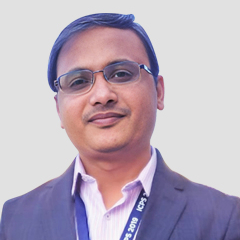
Prof. Mandeep Singh Rana
Professor
Centre for Automotive Research and Tribology
Indian Institute of Technology Delhi
Dr. Mandeep Singh Rana received his B.Tech. degree in Electrical Engineering from the National Institute of Technology, Bhopal, India, in 2013 and his Ph.D. degree in Power Engineering from the Department of Electrical Engineering, Indian Institute of Technology Kanpur, in 2023. Prior to joining IIT Delhi, he worked as a Controls Engineer at GE Aviation. His current research interests include electric vehicle automation, maglev drive systems, and the design and control of power electronic converters.
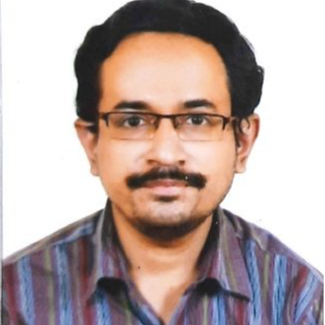
Prof. Saptarshi Basak
Assistant Professor
Centre for Automotive Research and Tribology
Indian Institute of Technology Delhi
Dr. Jadavpur University, Kolkata, in 2010, an M.Tech degree in Electrical Engineering with a specialization in Machines, Drives, and Power Electronics from the Indian Institute of Technology Kharagpur in 2012, and a Ph.D. degree from the Department of Electrical Engineering, Indian Institute of Technology Kharagpur, in 2019. After completing his Ph.D., he joined the Electronics and Control (R&D) Division of Shakti Pumps (India) Limited, where he was involved in firmware development for solar pump drives, grid-connected photovoltaic converters, and hybrid inverters. In April 2021, he joined the Centre for Automotive Research and Tribology (CART). His research interests include the design and control of special electric machines, on- board generation systems, estimation techniques, control of AC drives, and on-board chargers.
Programme Sample Certificate
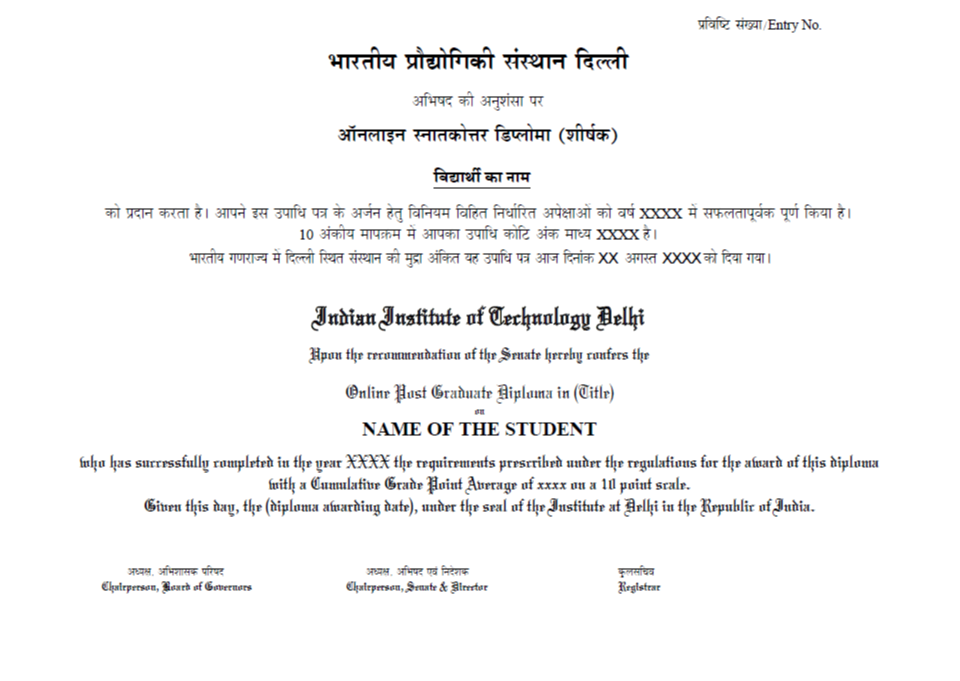
Complete all the course requirements successfully to obtain this prestigious recognition from IIT Delhi.
The above Online PG Diploma is for illustrative purposes only, and the format of the certificate may be changed at the discretion of IIT Delhi.
The organising department of this programme is the Centre for Automotive Research and Tribology (CART), IIT Delhi.
An online PG Diploma will be issued separately by the organizing department.
Installment Schedule
Programme Fee INR 4,50,000 + GST
Instalment | Particulars | Amount (₹)** |
Application Fee | To be paid at the time of application | 1,000 |
1st Instalment | 3 days from releasing the offer letter | 1,50,000 |
2nd Instalment | 10th January 2026 | 1,50,000 |
3rd Instalment | 10th May 2026 | 1,50,000 |
**GST @ 18% will be charged in addition to the fee. **
Affiliate Alumni Fee* | Within one week of the offer rollout | 10,000/- + GST |
Note:
*Payment of fees should be submitted in the IIT Delhi CEP account only, and the receipt will be issued by the IIT Delhi CEP account for your records.
Programme Fee, once paid, is non-refundable and non-transferable.
Reappearing in the exam is allowed up to 3 attempts by paying the re-examination fee for each attempt in each course.
Affiliate Alumni Status
All students must pay a one-time, non-refundable, mandatory affiliate alumni membership fee of INR 10,000/- plus applicable taxes at the time of admission, which will be charged over and above the programme fee.
The Affiliate Alumni, with prior approval from the Alumni and Endowment Office, are allowed to visit the IIT Delhi campus as per the Institute’s visitor policy.
The fees mentioned above are exclusive of GST. *GST will be charged extra on these components; at present, it is @18%.The
Refund Policy
Programme Fee once paid is non-refundable and non-transferable.
Programme Related Video
Frequently asked questions
The ideal cohort for this PG Diploma EV Technology programme is listed below:
Best suited for students from Electrical, Electronics, and related fields, building on core engineering principles.
Postgraduate Students: Ideal for those specializing in EV technology, renewable energy, or power systems, offering deep technical and research insights.
Industry Professionals: Engineers and researchers in automotive, power electronics, and renewable energy sectors seeking hands-on expertise in EV design, drivetrain, charging infrastructure, and energy storage.
Entrepreneurs & Innovators: Perfect for startups and professionals working on EV technology, charging solutions, and sustainable mobility, providing a holistic understanding of EV ecosystems.
The programme follows an interactive live online learning model, with real-time sessions by IIT Delhi faculty. Participants can attend from anywhere.
The total programme fee is INR 4,50,000 + GST.
Interested candidates can apply online through our portal and using CART, IIT Delhi’s registration link. Applications will be reviewed, and selected candidates will be notified by IIT Delhi.